Visiting Temple of Olympian Zeus in Athens
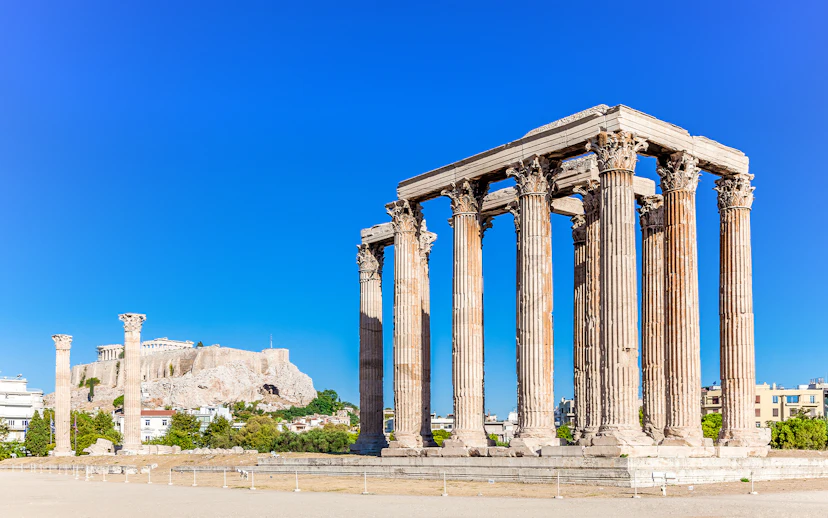
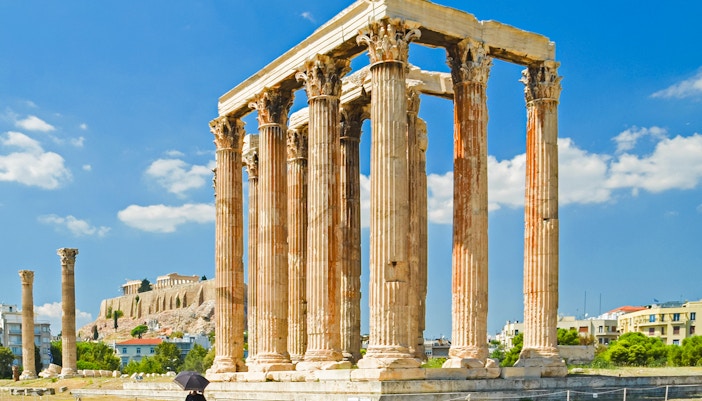
The Temple of Olympian Zeus is an ancient sanctuary best known for its giant Corinthian columns and the scale they still convey, even in ruin. This is a short, open-air visit rather than a deep, room-by-room site, and it feels more spacious and calmer than the Acropolis. The main thing that changes the experience is expectation: come for 20–30 minutes, strong visuals, and context you bring with you, not dense on-site interpretation. This guide covers timing, tickets, access, and what’s actually worth slowing down for.
Quick overview
This is one of Athens’ easiest add-on ancient sites, but it works best when you treat it as a short, well-timed stop rather than a headline half-day.
- When to visit: Daily, usually 8am–8pm in summer and 8am–5pm in winter; right at opening or after 5pm is noticeably calmer than 11am–1pm, because many Acropolis visitors and walking tours roll straight here late morning.
- Getting in: From €20 for single-site entry and €30 for the 7-site combo; same-day purchase is usually fine, but booking ahead helps on free-admission days and busy summer mornings.
- How long to allow: 20–30 min for most visitors, or up to 45 min if you want photos, the fallen column, and the smaller ruins around the perimeter.
- What most people miss: The toppled column drum pile and the Roman-era ruins around the edges add more to the visit than a quick center-path photo stop.
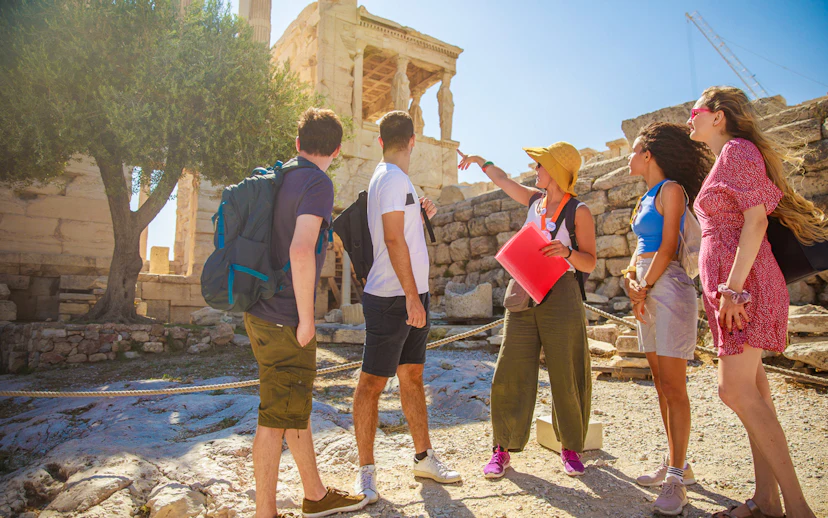
- Is a guide worth it? Yes if you want historical context, because on-site signage is sparse; otherwise a good audio guide is usually enough for a site this compact.
Jump to what you need
🕒 Where and when to go
🗓️ How much time do you need?
🎟️ Which ticket is right for you?
🗺️ Getting around
🏛️ What to see
♿ Facilities and accessibility
Where and when to go

How do you get to the Temple of Olympian Zeus?
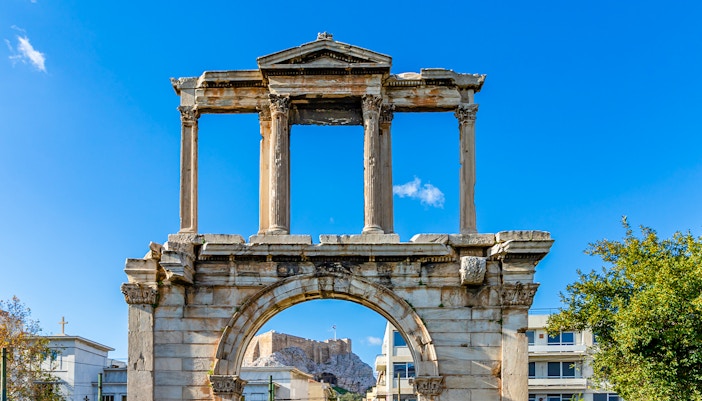
The site is in central Athens beside Hadrian’s Arch, a short walk from Acropoli station and about 10 minutes on foot from Syntagma Square.
Vasilissis Olgas Avenue, Athens, Greece
→ Open in Google Maps (Temple of Olympian Zeus)
- Metro: Acropoli station (Line 2) → 5-min walk → easiest arrival point for combining the site with the Acropolis Museum.
- Tram: Zappeio stop → 5-min walk → useful if you’re coming from Syntagma or the coast.
- Bus / Hop-On Hop-Off: Hadrian’s Arch area stop → 2–5 min walk → simplest if you’re sightseeing across central Athens.
- Taxi / rideshare: Drop-off at Hadrian’s Arch → 1–2 min walk → best if you’re avoiding summer heat.
Which entrance should you use?
There’s one main visitor entrance on Vasilissis Olgas Avenue near Hadrian’s Arch, and the mistake most people make is expecting multiple access points around the fence line.
- Main entrance: Located beside Hadrian’s Arch. Expect 0–15 min wait during late-morning summer hours.
When is Temple of Olympian Zeus open?
- April–October: 8am–8pm
- November–March: 8am–5pm
- Major holiday closures: Jan 1, Mar 25, May 1, Greek Easter Sunday, Dec 25–26
- Last entry: About 20–30 min before closing
When is it busiest? Late morning to early afternoon, especially from April to September, when Acropolis spillover and walking tours make the site feel busier than its size suggests.
When should you actually go? Go at opening or in the last 2 hours of the day for softer light, cooler temperatures, and clearer photo angles around the columns.
Time allocation & what to expect at Temple of Olympian Zeus
| Visit type | Route | Duration | Walking distance | What you get |
|---|---|---|---|---|
Highlights only | Main entrance → Temple columns → Hadrian’s Arch viewpoint → Exit | 30–45 mins | ~0.5 km | Ideal for visitors short on time. You’ll see the iconic Corinthian columns and key viewpoints, but won’t spend much time reading exhibits or exploring the surrounding grounds. |
Balanced visit | Entrance → Full temple perimeter → Hadrian’s Arch → Photo stops → Informational panels → Exit | 1–1.5 hrs | ~1 km | Gives you time to appreciate the scale and history of the sanctuary while enjoying the nearby viewpoints and archaeological details often skipped on quick visits. |
Full exploration | Full site circuit → Extended photo stops → Combined walk toward Acropolis district or museum area | 2+ hrs | ~2 km | Best for history enthusiasts combining the site with nearby ancient Athens landmarks. The extra time allows for a slower pace, detailed exploration, and city views. |
Which Temple of Olympian Zeus ticket is best for you
| Ticket type | What's included | Best for |
|---|---|---|
Temple of Olympian Zeus entry ticket | Single-site entry to the Olympieion archaeological site | A short standalone stop when you want to get inside the fence, see the fallen column up close, and move on quickly |
Athens 7-site combo ticket | One entry to Olympieion + Acropolis and Slopes + Ancient Agora + Roman Agora + Hadrian’s Library + Kerameikos + Aristotle’s Lyceum | Seeing at least 2–3 major ruins over several days and avoiding separate entry fees |
Guided Athens walking tour including Temple of Olympian Zeus | Temple stop + licensed guide + broader city or mythology route | Wanting context at a site where the ruins are visually impressive but lightly interpreted on-site |
Self-guided audio tour with entry | Entry + app-based audio guide + offline route support | Exploring independently but still wanting more than the limited signage gives you |
How do you get around Temple of Olympian Zeus?
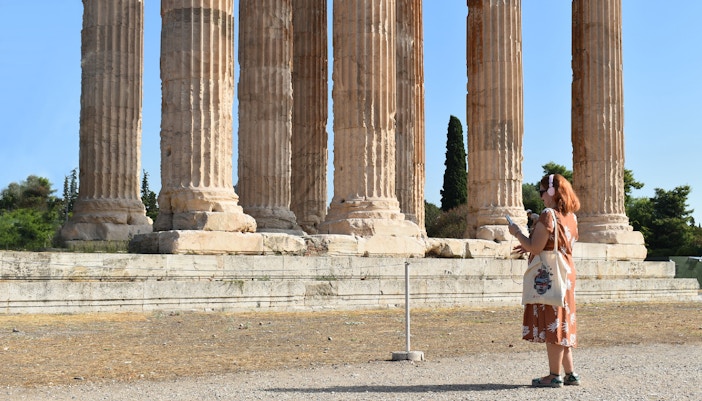
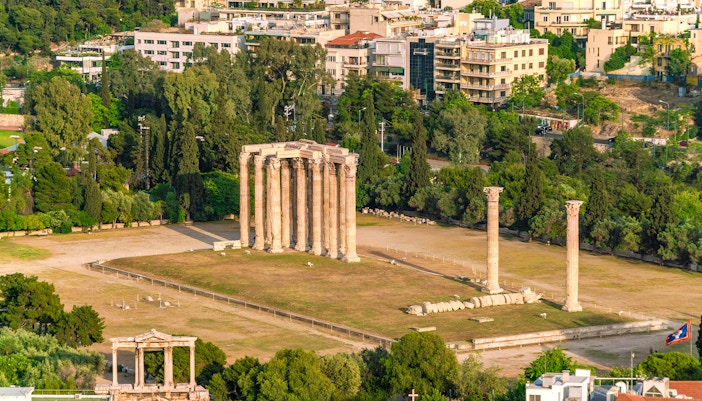
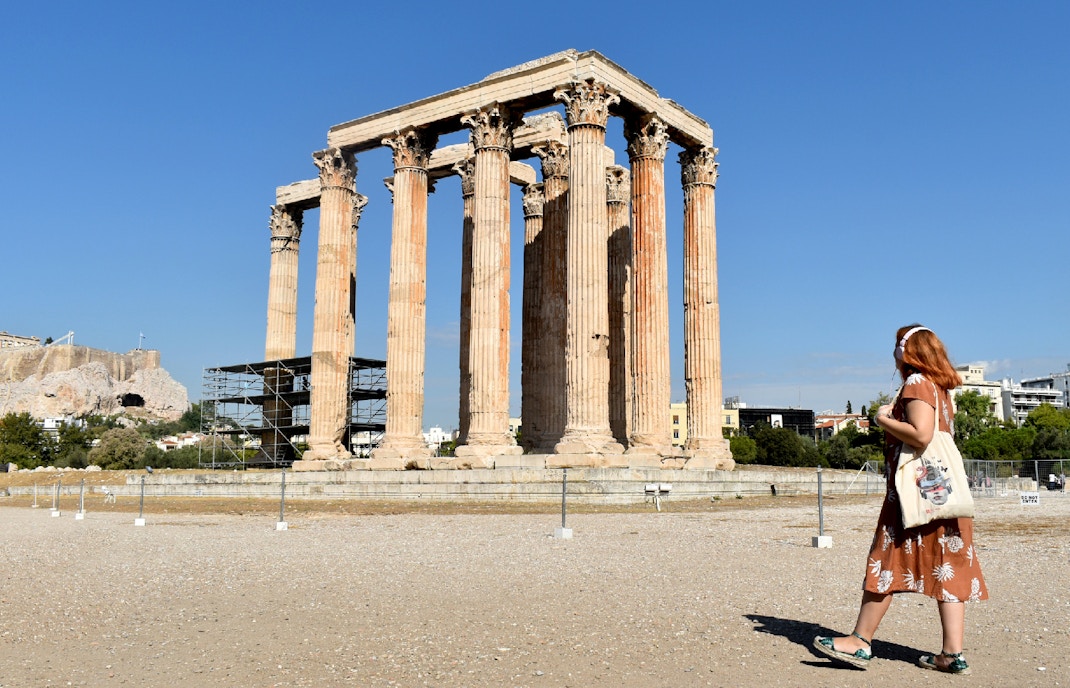
The site is best explored on foot and is compact enough to cover in 20–30 minutes, though a slow photography-focused visit can stretch to 45 minutes. The main temple platform sits at the visual center, with the smaller ruins and best Acropolis sightlines around the outer path.
Getting around the site
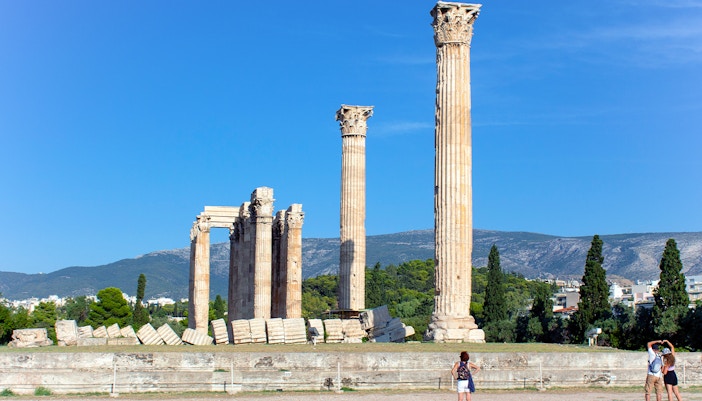
- Main colonnade: The surviving Corinthian columns and the temple’s scale-defining centerpiece → budget 10–15 min.
- Fallen column area: The toppled marble drums that show how the columns were assembled → budget 5–10 min.
- Perimeter ruins: Roman bath remains, later walls, and smaller archaeological fragments many visitors walk past → budget 5–10 min.
- Hadrian’s Arch exterior: The best transition point for photos and the clearest sense of how the site sits in modern Athens → budget 5 min.
Suggested route: Start with the main colonnade, loop south to the fallen column while the scale is still fresh in your mind, continue around the perimeter for the smaller ruins, and finish by exiting near Hadrian’s Arch, which most visitors photograph only after they’ve already rushed through the site.

Maps and navigation tools
- Map: There’s no must-have official printed map at the gate, so a saved site plan on your phone is enough for this compact layout.
- Signage: Wayfinding is simple, but interpretation is thin, so navigation is easy even when understanding what you’re seeing is not.
- Audio guide / app: There’s no standard on-site audioguide device, and a third-party app adds more value here than at better-labeled Athens sites.
💡 Pro tip: Walk the full perimeter before you leave, the outer-edge ruins and Acropolis sightlines are what most quick visitors miss after taking their first column photo.
What are the most significant spaces in Temple of Olympian Zeus?
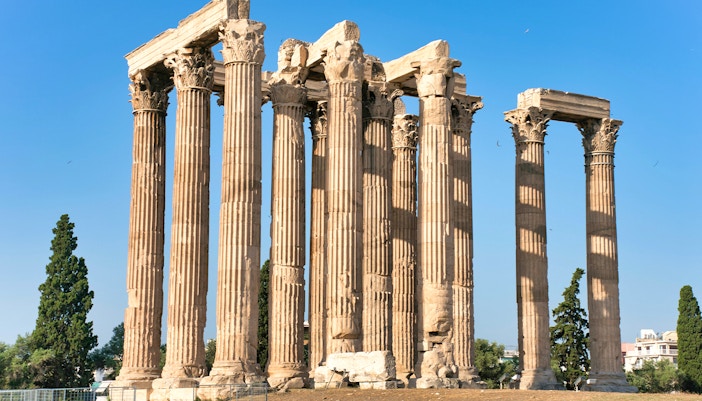
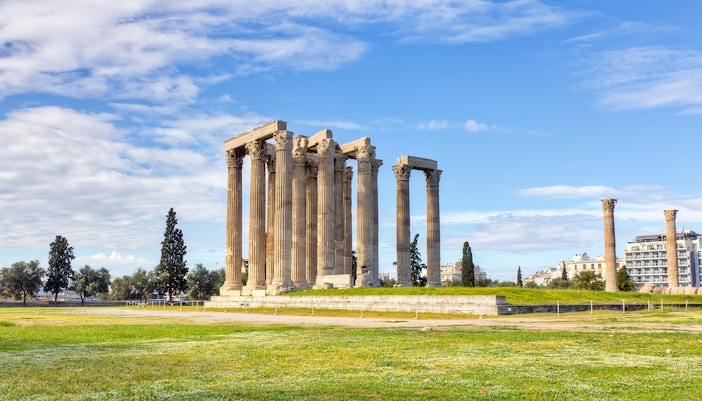
The standing Corinthian columns
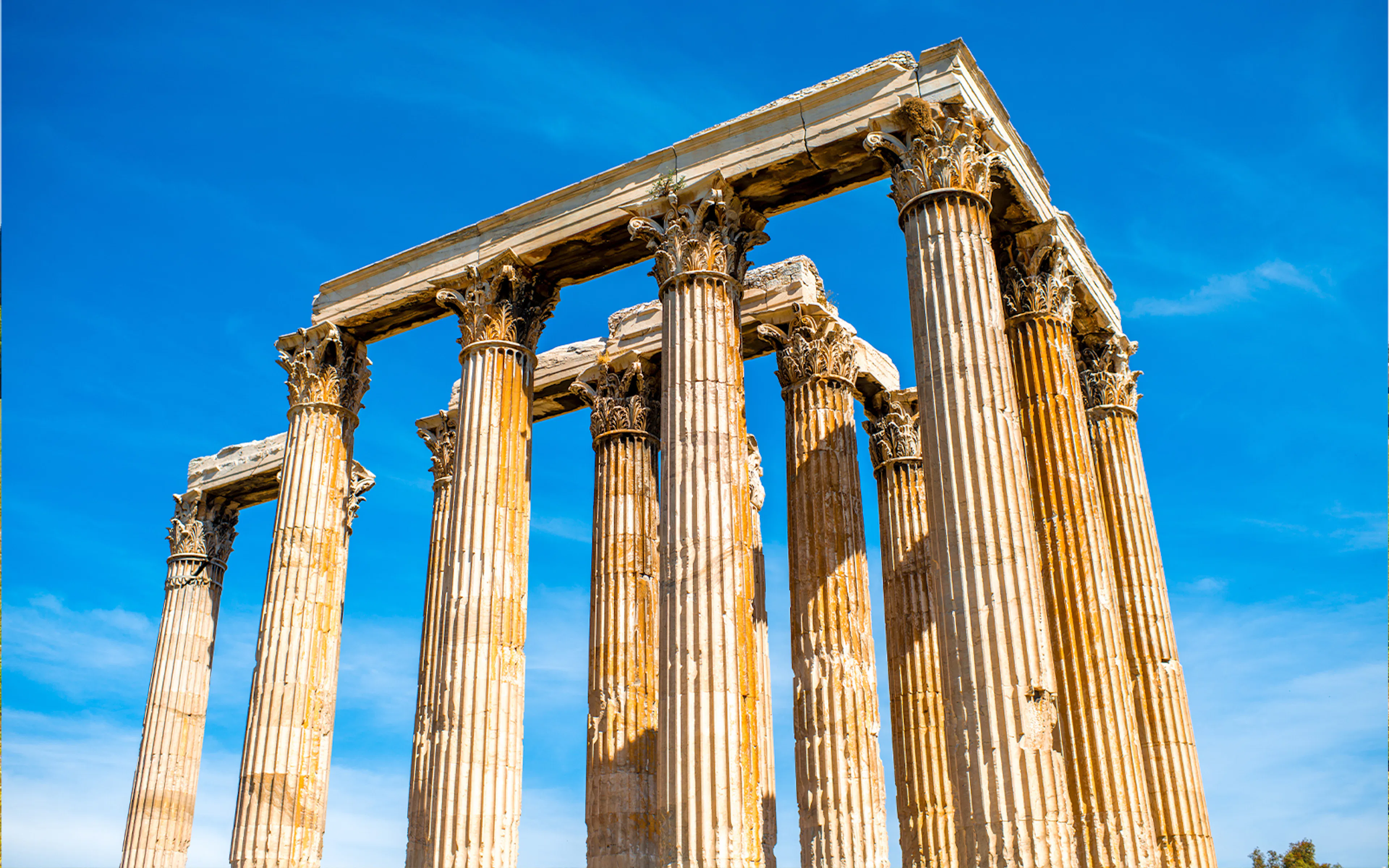
Era: Roman completion, 131 AD
These are the reason to come: 15 surviving marble columns still rise about 17 m (56 ft), which is enough to make the temple’s lost scale feel believable rather than abstract. What most visitors miss is the carved detail high on the Corinthian capitals and the inscriptions on some column surfaces that record later chapters of the site’s life.
Where to find it: At the center of the archaeological site on the main temple platform.
The fallen column
Feature: Marble drum construction revealed
One of the most memorable details here is the column that fell in 1852 and still lies in sequence on the ground. Most people photograph it quickly and move on, but this is the easiest place to understand how the giant shafts were built drum by drum, including the central joining points.
Where to find it: Along the south side of the temple platform.
Hadrian’s Arch
Era: Roman, c. 131 AD
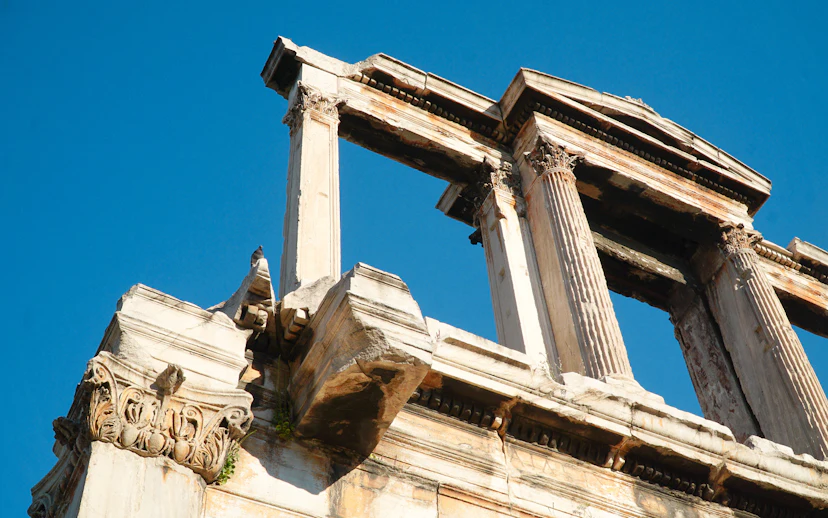
Although it sits outside the paid enclosure, Hadrian’s Arch makes the temple visit feel complete because it marks the Roman reshaping of Athens at the same moment the temple was finished. What many visitors miss is that the arch works best as a framing device: look through it for layered views of the columns and the city beyond.
Where to find it: Just outside the northwest corner of the site at the main approach.
The sanctuary perimeter ruins
Feature: Roman baths, walls, and later remains
The outer parts of the site look modest at first glance, but they give the temple context by showing that this was never just a standalone monument in an empty field. Most visitors skip these low foundations, even though they reveal Roman-era baths, later occupation, and the changing life of the sanctuary across centuries.
Where to find it: Around the edges of the visitor path beyond the main column group.
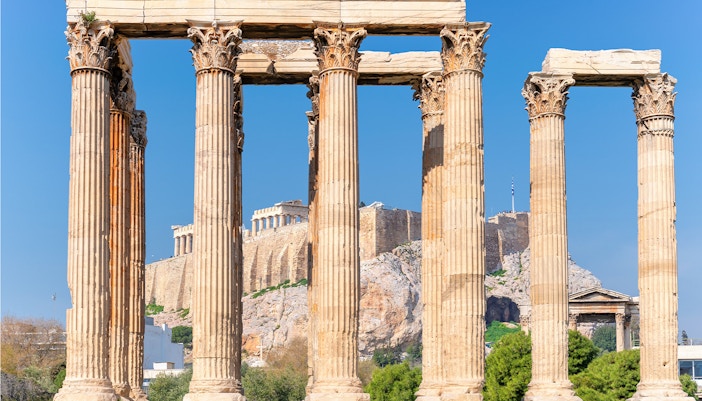
The Acropolis sightline
View type: Historic city panorama
One of the quiet rewards of this visit is how clearly the temple connects to the rest of ancient Athens through its sightlines. Visitors often focus only inward on the columns, but some of the most satisfying views are outward — especially where the surviving marble rises with the Acropolis in the background.
Where to find it: Best from the southeast and eastern edges of the site, and from near Hadrian’s Arch outside the entrance.
Facilities and accessibility
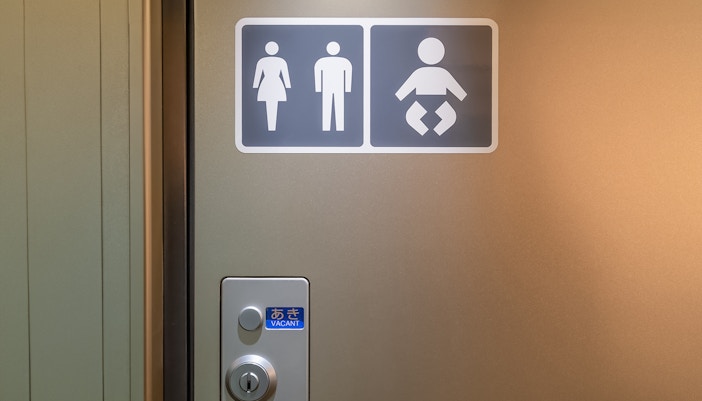
- 🚻 Restrooms: There is a small on-site toilet, which is useful because this stop is often slotted between longer walks around the Acropolis and Plaka.
- 🎟️ Ticket booth: You can buy tickets at the entrance, though online purchase is smoother if you want to walk straight in on a busy summer morning.
- 🧾 Combo ticket acceptance: The 7-site Athens archaeological pass is accepted here, which makes entry faster if you’ve already bought it at another major site.
- 🅿️ Parking: There is no dedicated visitor lot, and driving is usually more hassle than it’s worth in this part of central Athens.
- 🌳 Shade nearby: The site itself is exposed, but the National Garden is directly across the road if you need a shaded break before or after.
- 🥤 Food and drink: There is no café inside, so bring water before you enter and plan meals in nearby Plaka, Makrygianni, or around Acropoli station.
- ♿ Mobility: The main route is mostly flat and manageable, with wide paths and no steps needed for the core views, though gravel and a few uneven edges can make some sections slower.
- 👁️ Visual impairments: On-site interpretation is limited, so this is easier with a pre-downloaded audio guide than by relying on labels once inside.
- 🧠 Cognitive and sensory needs: This is one of the calmer central ancient sites in Athens, and opening time is the easiest window if you want extra space and fewer groups.
- 👨👩👧 Families and strollers: Strollers can use the main perimeter path, but the rougher ground near some smaller ruins is bumpier than the central route.
This is a good short stop for children who like big visuals and open space, but it works better as a 20–30 minute add-on than as a stand-alone family attraction.
- 🕐 Time: With young children, 20–25 min is usually enough before attention drifts, so prioritize the standing columns, the fallen column, and Hadrian’s Arch.
- 🏠 Facilities: The biggest family plus is the on-site restroom and the easy access to the National Garden nearby for a break afterward.
- 💡 Engagement: Turn the fallen column into the main kid focus, because it’s the easiest way for them to picture how the giant temple was put together.
- 🎒 Logistics: Bring water, sun protection, and a stroller with decent wheels, especially from late spring through early fall when the site is exposed.
- 📍 After your visit: The National Garden is the easiest child-friendly follow-up if you need shade, space, and a change of pace right away.
Rules and restrictions

What you need to know before you go
- Entry requirement: You can enter with either a single-site ticket or the Athens 7-site combo ticket, and free or reduced admission categories should carry ID.
- Bag policy: Large bags are best avoided because there’s no cloakroom here, so anything you bring needs to stay with you.
- Re-entry policy: Re-entry is not permitted once you exit, so treat this as one short continuous visit rather than a stop you’ll dip in and out of.
Not allowed
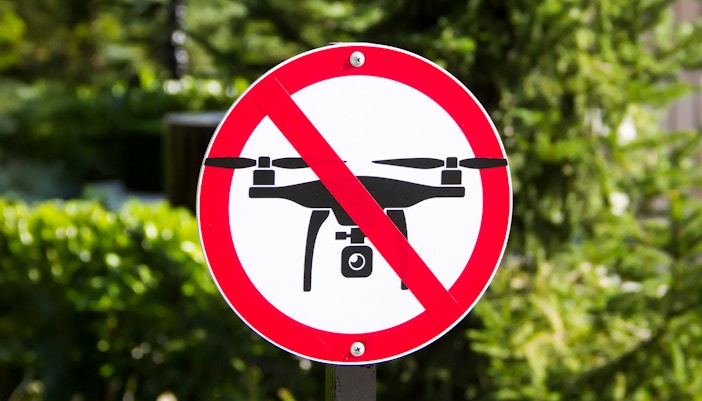
- 🚁 Drones: Drones are not allowed without special permission because this is a protected archaeological site.
- 🎒 Oversized luggage: Large bags are impractical here because there is no storage facility at the entrance.
- 🖐️ Climbing on the ruins: Stay on the visitor paths and off the ancient remains to protect fragile stonework and avoid injury.

Photography
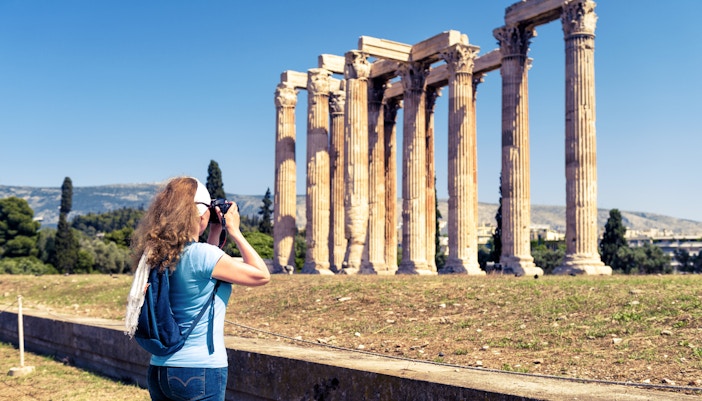
- Personal photography is allowed throughout the open-air site, and this is one of the easiest Athens ruins to photograph because the sightlines are wide and unobstructed.
- The important restriction is aerial filming: drones require permission and should not be assumed to be allowed.
- If you’re carrying bulky camera gear, keep in mind that there’s no storage on-site and the paths are open and exposed.
Practical tips
- Booking and arrival: Buy online only if you want a smoother entry or you’re visiting on a free-admission day or summer morning, because this site rarely needs long lead times the way the Acropolis can.
- Pacing: Save your slowest 10 minutes for the fallen column and the perimeter ruins, because most people burn all their attention on the first column view and leave too early.
- Crowd management: The best slot is right at opening or after 5pm, when Acropolis spillover is lowest and the marble photographs better than it does under harsh midday sun.
- What to bring or leave behind: Bring water and a hat from April to October, and leave bulky bags behind because there’s no cloakroom and the site offers very little shade.
- Food and drink: Eat before or after, not between sights, because there’s no café inside and this stop is too short to justify breaking your route for it.
- Expectations: This is worth entering if you want the scale, the fallen column, and the quieter atmosphere, but it can feel overpriced as a standalone stop if parts of the site are under restoration.
- Route planning: Pair it with the Acropolis Museum, Plaka, or the National Garden, because that’s when the short visit length feels like a strength rather than a limitation.
What else is worth visiting nearby?
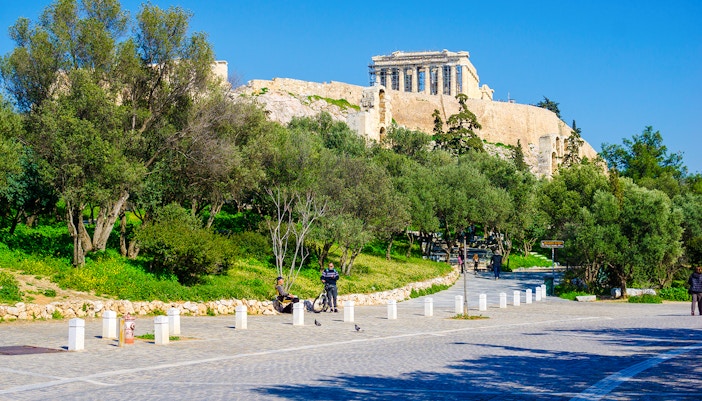
Commonly paired: Acropolis of Athens and Parthenon
Distance: About 10–15 min walk
Why people combine them: This is the most natural same-day pairing in Athens, because the Temple of Olympian Zeus works as a shorter, calmer counterpoint before or after the city’s main ancient site.
Book / Learn more
✨ Temple of Olympian Zeus and the Acropolis are most commonly visited together — and simplest to do on a combo ticket. The 7-site archaeological pass covers both and saves you from buying separate entries.

Commonly paired: Acropolis Museum
Distance: About 350 m — 5 min walk
Why people combine them: The museum gives the historical context and indoor depth that the temple site itself lacks, so the two experiences balance each other well.
Also nearby
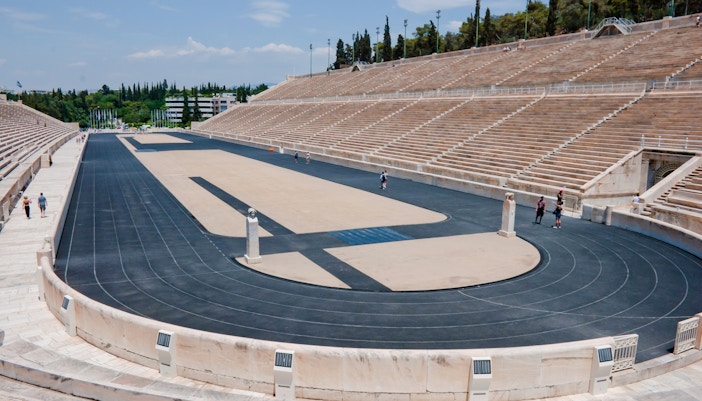
Panathenaic Stadium
Distance: About 1 km — 15 min walk
Worth knowing: It adds a different chapter of Athens history and works especially well if you want another open-air site without committing to a full museum stop.
National Garden
Distance: Across the road — 2–5 min walk
Worth knowing: It’s the easiest reset after a hot or bright visit, especially if you need shade, a slower pace, or a family-friendly breather.
Eat, shop and stay near Temple of Olympian Zeus
- On-site: There’s no café inside the archaeological site, so this is a before-or-after meal stop rather than somewhere to linger over food.
- Plaka tavernas (5–10 min walk, Adrianou Street area): Traditional Greek food, broad price range, and the easiest post-visit option if you’re continuing into the old town.
- Makrygianni cafés (5–8 min walk, around Acropoli station): Coffee, pastries, and lighter breakfasts that fit well before an Acropolis or museum visit.
- Zappeion / National Garden kiosks (8–10 min walk, Vasilissis Amalias area): Simple drinks and snacks that are more about convenience and shade than a full meal.
- 💡 Pro tip: If you’re doing the Acropolis and the temple on the same day, eat after both — the temple is too short a stop to justify breaking your route in the middle.
- Plaka souvenir shops: The closest easy browsing area for ceramics, magnets, olive-wood gifts, and standard Athens keepsakes after you leave the site.
- Monastiraki flea market: Better than the immediate temple area if you want more character, antiques, jewelry, or a longer browsing session rather than one quick souvenir stop.
Yes for a short Athens stay, especially if you want to walk to major ancient sites instead of relying on transit. The area around Acropoli, Makrygianni, and Plaka is convenient, central, and sightseeing-heavy, which suits first-time visitors far better than drivers or travelers looking for a quieter local neighborhood.
- Price point: Central and visitor-friendly, with rates usually higher than less touristy Athens districts but strong value if walkability matters to you.
- Best for: Short trips where you want the Acropolis, museum, Plaka, and the Temple of Olympian Zeus all within easy walking distance.
- Consider instead: Syntagma if you want stronger transport links and a more city-center feel, or Koukaki if you want a slightly more local base with easier cafés and fewer crowds.
Frequently asked questions about visiting Temple of Olympian Zeus
Most visits take 20–30 minutes. If you like photography, want to see the fallen column properly, or plan to walk the full perimeter for the smaller ruins, give yourself up to 45 minutes. It is not a half-day site unless you are pairing it with a guided route through central Athens.
No, you usually do not need to book far in advance. Same-day entry is often fine because the site rarely sells out, but booking online is still useful if you want to skip the ticket booth or you are visiting on a free-admission day or a busy summer morning.
Arrive at opening time if you want the best light, the lowest heat, and the fewest people in your photos. If you are buying on-site, 10–15 minutes before you want to enter is enough on most days, because this site generally has modest entry lines.
Yes, a small bag or backpack is fine, but large bags are a bad idea. There is no cloakroom or storage facility here, so whatever you bring stays with you for the full visit. A light day bag with water and sun protection is the practical choice.
Yes, personal photography is allowed and this is one of the easiest central Athens ruins to photograph. The main restriction is drones, which require special permission because the site is archaeologically protected. The best photo windows are early morning and late afternoon.
Yes, and many walking tours of central Athens include it as a stop. It works well in groups because the site is open and easy to cover quickly, but it is most rewarding when your guide explains the temple’s scale and the Roman additions that are easy to miss on your own.
Yes, especially as a short stop rather than a long stand-alone activity. Children usually respond well to the giant columns and the fallen drum pile, and the site is easy to combine with the National Garden or the Acropolis Museum if you want to keep the day varied.
Partly, yes. The main paths are flat enough for many wheelchair users and strollers, and you do not need steps to get the core views, but some sections are gravelly or uneven. It is more manageable than many hilltop ruins, though not perfectly smooth throughout.
No food is available inside the site, but there are many options nearby. Plaka, Makrygianni, and the Acropoli station area are all within a short walk, so this is easy to plan around. Bring water with you, especially in warm months, because the site is exposed.
Yes, it is included in the Athens 7-site archaeological combo ticket. That pass also covers the Acropolis and several other major ruins, and it is valid for 5 consecutive days. It is usually the better-value option if you plan to visit more than 1 or 2 sites.
Yes, you can see the columns from outside the fence and from around Hadrian’s Arch. That is enough for some travelers, especially if they are budget-conscious, but going inside gives you the fallen column, the smaller surrounding ruins, and better angles for understanding the site’s true scale.
Yes, Greece’s state archaeological-site free days usually apply here. The most useful one for many travelers is the first Sunday of each month from November through March, and there are a few other national free-entry dates across the year. Expect those days to be busier than usual.
More reads
Temple of Olympian Zeus tickets
Temple of Olympian Zeus highlights
Getting to Temple of Olympian Zeus